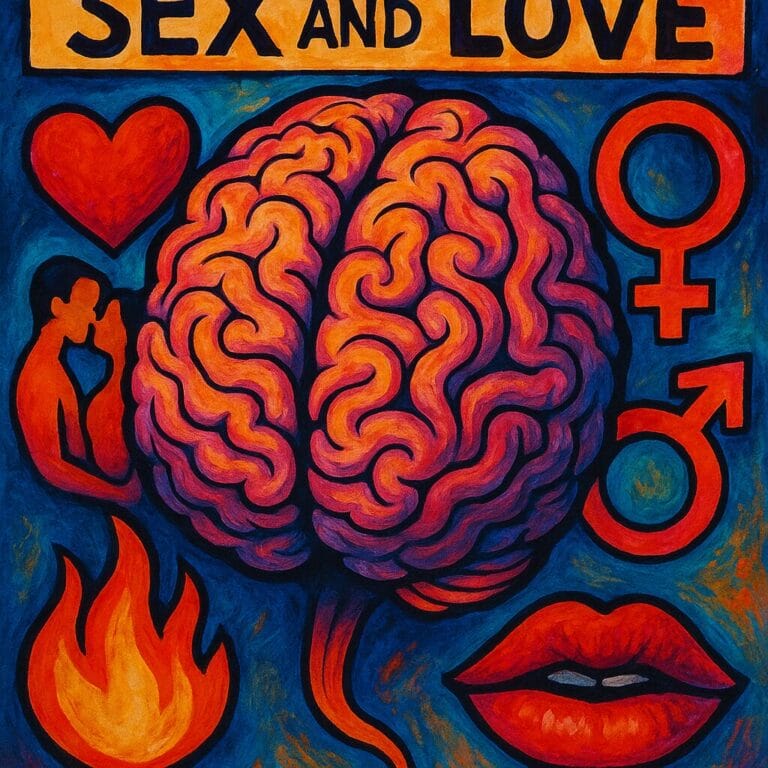
The Brain’s Chemistry on Love and Lust
The Chemistry of Love, Lust, and Desire: How Your Brain Shapes Sexual Attraction
The feelings we associate with sex, love, and attraction are not random — they’re a carefully balanced cocktail of brain chemicals that shape our emotions, desires, and behaviors. Understanding these neurochemicals helps us make sense of why we crave connection, why passion fades, and how to reignite desire.
Dopamine = Persistence and Desire
Dopamine is the brain’s reward neurotransmitter — the fuel behind motivation, craving, and sexual pursuit. When we fall in love or desire someone, dopamine levels rise, stimulating testosterone, the hormone linked to sexual drive.
This powerful combination makes us crave intimacy and seek pleasure. When dopamine drops, we often feel bored, disconnected, or uninterested in sex. A lack of dopamine activation can show up as low libido, sexual self-doubt, or a loss of excitement in long-term relationships.
In sex therapy, reigniting this reward system often begins with rekindling curiosity, novelty, and play — the brain’s natural triggers for dopamine release.
Norepinephrine = Energy and Excitement
If dopamine is desire, norepinephrine is the rush. This neurotransmitter increases energy, focus, and emotional intensity. Elevated norepinephrine can lead to sleeplessness, restlessness, or even a loss of appetite — that “can’t-eat, can’t-sleep” feeling of new love.
It also strengthens memory and emotional imprinting, helping you remember the details of your lover’s scent, touch, or voice. This heightened alertness is why early romance feels electric — it’s your body’s chemistry linking love and energy.
Serotonin = Mood and Obsession
When we’re in love, serotonin levels actually drop. This dip can lead to obsessive thoughts — the constant replaying of texts, glances, or fantasies. The phrase “I can’t get you out of my mind” perfectly captures serotonin’s role in romantic preoccupation.
A balance of serotonin helps regulate emotions, grounding passion with calm connection. Too little can create fixation; too much can dull excitement.
The Love Cocktail: High Dopamine + High Norepinephrine + Low Serotonin
This blend is the chemical signature of passionate love — a state of heightened desire, pleasure, and focus. Our brains are hard-wired to seek connection; the sex drive helps us bond, explore, and regulate both body and mind.
Sex isn’t just about pleasure — it tones the body, releases stress, and nurtures emotional well-being.
Lust vs. Love: What’s the Difference?
Lust is the craving for sexual fulfillment — a surge of hormones and neurotransmitters seeking release. It’s instinctive and often physical.
Love, however, involves motivation and emotional planning. It’s the brain’s attachment system, driving us to connect, nurture, and sustain intimacy.
Both systems are essential. Lust initiates; love sustains.
Do We Need Love?
Biologically, yes. Love is a primal drive, like hunger or thirst. It targets a specific reward: emotional connection. Just as hunger is satisfied by food, love is nourished by intimacy — emotional, physical, and spiritual.
Each relationship experience reshapes this reward system, influencing how we feel pleasure, trust, and attachment.
The Evolution of Love
Love evolves — from lust to romance to secure attachment. Passion transforms into comfort, curiosity, and deep connection. In therapy, we explore ways to recreate novelty and erotic energy so that long-term love doesn’t lose its spark.
As Esther Perel reminds us, “How you were loved is how you love.” Our love style is shaped by early experiences, yet we can always rewrite our patterns through awareness and healing.
Final Thoughts: The Cocktail of Sex and the Science of Intimacy
Love and sex are not separate forces — they’re interconnected systems of biology, psychology, and emotion. The brain’s “sex cocktail” — dopamine, norepinephrine, and serotonin — influences our motivation, attachment, and perception of pleasure.
Understanding this chemistry empowers us to approach relationships with curiosity, compassion, and conscious desire — turning love from a reaction into a mindful, embodied practice.