Is Egg Freezing for You?
When should women begin thinking about freezing their eggs? Why would anyone consider this option? What are some things you should know before pursuing it?
Over the past decade, the age of first pregnancy has shifted dramatically. More women are choosing to delay motherhood, whether by intention, circumstance, or a combination of both. Careers, education, financial stability, partnership timing, and personal readiness all play a role. Today, many women are asking not just when to have children, but whether they want to at all.
From a clinical and psychological perspective, this shift reflects greater autonomy and expanded choice. At the same time, it can bring up very real questions about fertility, health, and the limits of the body.
As a psychologist who works closely with women around sexuality, relationships, and reproductive decision-making, and also as a woman navigating these questions myself, I believe it is essential to approach fertility conversations with nuance rather than fear.
When Curiosity Meets the Body
Recently, I decided to undergo fertility testing. This included blood work to assess hormone levels and an ultrasound to evaluate ovarian health and egg reserve. Like many women, I approached the process with curiosity, not panic, and a desire for information rather than certainty.
The ultrasound revealed ovarian cysts and a fibroid, and my physician raised the possibility of endometriosis. A definitive diagnosis often requires invasive testing, which many doctors discourage in women who have not yet had children due to the potential risk to ovarian tissue.
This moment underscored something I see often in clinical practice: fertility assessments can offer clarity, but they can also introduce complexity. Information does not always bring immediate answers, and sometimes it opens a longer conversation with the body.
Understanding Endometriosis Beyond Fertility
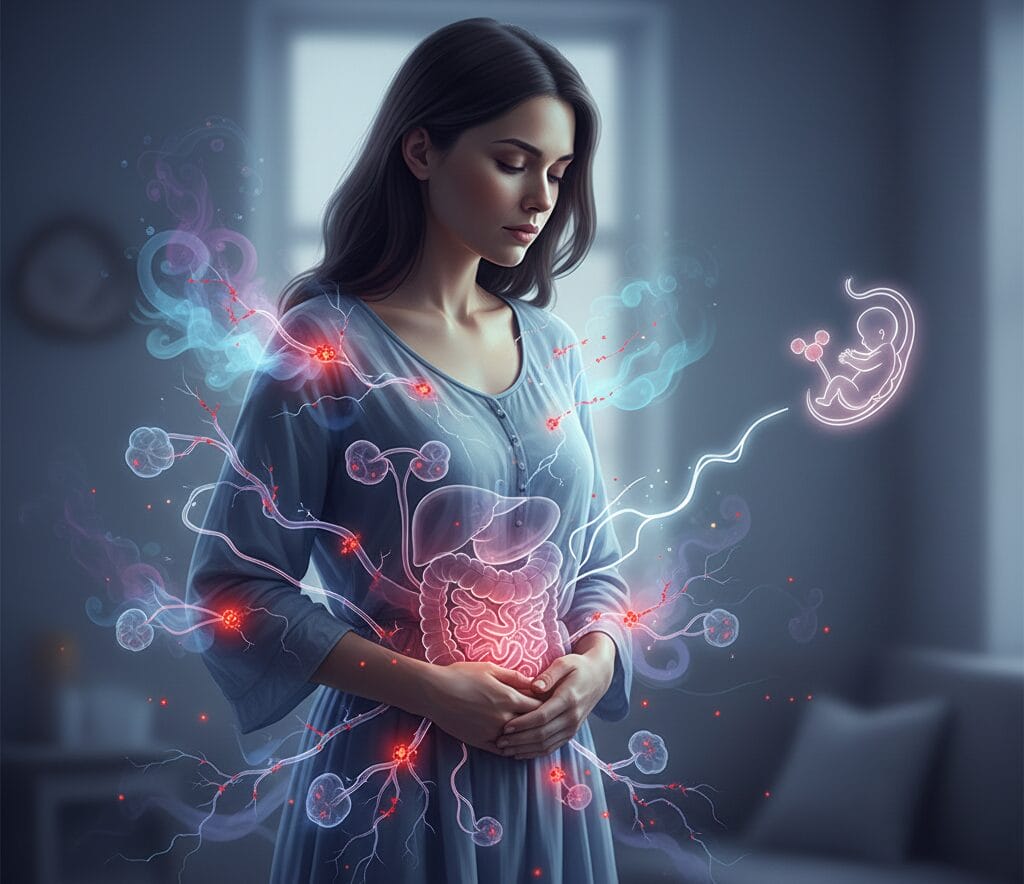
Endometriosis is a chronic inflammatory condition in which tissue similar to the uterine lining grows outside the uterus. It can affect the ovaries, fallopian tubes, pelvic lining, bladder, bowels, and other surrounding structures. For many women, symptoms include painful or heavy periods, pelvic pain, bloating, fatigue, and discomfort during intercourse. In some cases, endometriosis is associated with challenges related to fertility.
What is often less discussed is that endometriosis is not solely a reproductive issue. It is a whole-body condition involving immune function, inflammation, and nervous system sensitivity. This means that treatment and management are not only about pregnancy outcomes, but about quality of life, pain reduction, and long-term wellbeing.
Fertility Windows and Psychological Weight
My hormone levels suggested that pregnancy could be possible. The larger question now is not simply biological readiness, but how to manage inflammation, reduce health risks, and make decisions that align with my life and relationship.
My partner and I have chosen to pause the idea of starting a family. We are also openly discussing whether parenthood is right for us at all. This kind of uncertainty is far more common than people admit. Many women feel pressure to decide quickly, as if fertility exists on a rigid countdown clock.
From a psychological standpoint, this pressure can create anxiety rather than clarity. Fertility conversations deserve time, reflection, and space to evolve.
Egg Freezing as an Option, Not a Promise
Egg freezing has become more visible and more accessible, and for some women, it can be a helpful option. It offers time and flexibility, especially when reproductive timing does not align with personal or medical circumstances.
That said, egg freezing is not a guarantee. It is a medical procedure with limitations, costs, and emotional considerations. Success depends on age at freezing, egg quality, overall health, and the freezing and thawing process itself.
Egg freezing may be worth exploring for women who:
- Are undergoing cancer treatment that may affect fertility
- Have medical conditions that could impact egg reserve
- Have a family history of early menopause
- Are not ready for pregnancy but want to preserve reproductive options
It is equally valid to decide that egg freezing is not the right path. Choice includes opting in and opting out.
For some women, the possibility of needing fertility treatments later in life becomes a meaningful factor, not only medically, but emotionally and financially, when weighing their reproductive options.
A Clinical Perspective on Choice and Agency
As a Licensed Psychologist and Therapist, I encourage women to approach fertility decisions from a place of agency rather than obligation. Your body is not a problem to solve. It is a system to listen to.
Reproductive decisions intersect with identity, partnership, mental health, culture, and values. There is no universal timeline and no single correct choice. The most psychologically protective factor is informed consent combined with self-trust.
Asking the Right Questions
If you are considering egg freezing or fertility preservation, it is important to ask thoughtful questions:
- What are the clinic’s success rates by age group?
- How many cycles are typically needed?
- What are the short-term and long-term health considerations?
- What emotional support is available during the process?
Information empowers choice, but only when it is contextualized and compassionate.
Closing Reflection
The question is not simply to freeze or not to freeze. The deeper question is how to live in relationship with uncertainty while honoring your body, your health, and your desires.
Fertility is not just biological. It is emotional. It is relational. It is deeply personal.
Whatever choice you make, it should belong to you.
Sources and Further Reading
- American College of Obstetricians and Gynecologists (ACOG) – Fertility & Reproductive Aging
👉 Fertility, reproductive aging, and egg freezing guidance
https://www.acog.org/womens-health/faqs/having-a-baby-after-age-35-how-aging-affects-fertility-and-pregnancy ACOG
👉 ACOG guidance on fertility counseling and age-related decline
https://pubmed.ncbi.nlm.nih.gov/41100882/ PubMed - American Society for Reproductive Medicine (ASRM) – Egg Freezing & Fertility Options
👉 Planned oocyte cryopreservation (egg freezing) ethics and guidance
https://www.asrm.org/practice-guidance/ethics-opinions/planned-oocyte-cryopreservation/ ASRM
👉 ASRM main site (resource hub for fertility and ART guidance)
https://www.asrm.org/ ASRM - Centers for Disease Control and Prevention (CDC) – Assisted Reproductive Technology (ART)
👉 CDC ART Success Rates and Clinic Data
https://www.cdc.gov/art/success-rates/index.html CDC
👉 CDC IVF Success Estimator (live birth likelihood tool)
https://www.cdc.gov/art/ivf-success-estimator/index.html CDC
👉 CDC National ART Summary data and trends
https://www.cdc.gov/art/php/national-summary/index.html CDC - World Health Organization (WHO) – Endometriosis Fact Sheet
👉 WHO fact sheet on endometriosis — prevalence, symptoms, global overview
https://www.who.int/news-room/fact-sheets/detail/endometriosis World Health Organization - National Institutes of Health (NIH) – Endometriosis & Women’s Health
👉 NIH Women’s Health Research on endometriosis
https://discoverwhr.nih.gov/research/endometriosis/ Discover Women’s Health Research