


Hair, Shame, and the Sensual Self
I was twelve when I first picked up a razor. My mom had said no to shaving my legs, but when I went to visit my dad that summer, he handed me one without hesitation. I didn’t know what I was doing. I dragged the blade up my leg, nicked my skin, and shaved off half my kneecap. The scar is still there, a shiny reminder of the moment I learned that femininity, at least as I understood it then, meant removing what was natural.
I grew up thinking hair made me wrong. I was teased for being “too hairy” and learned quickly that smooth skin was something to strive for, a symbol of being feminine, pretty, and clean. Hair meant wildness. Hair meant boyishness. Hair meant shame.
That first cut was more than physical. It was the beginning of an internal division between what I was told I should look like and what my body actually was.
Early Lessons in Femininity
For years, I believed that being hairless was the only way to be desirable. Every ad, every comment, every locker room conversation reinforced it. Shaving became ritualistic. Razor burn and red bumps felt like proof of my commitment to being acceptable.
When I think back now, I can see how early and how deeply these messages planted themselves. I learned that smoothness equaled beauty and control, while hair symbolized something to be managed, tamed, or erased.
The Comfort of Hair
Ironically, some of my earliest comforts were things with hair. My favorite Alf doll had fuzzy brown hair that I stroked until I fell asleep. My stuffed animals were soft and worn from constant cuddling. Those textures were grounding. They reminded me of safety and warmth.
Looking back through the lens of a psychologist, I understand now that sensory experiences like that shape our attachment to comfort and connection. They can even influence our erotic templates, the internal map of what we find pleasurable or familiar. It makes sense to me now that I’ve always loved hair on others. It feels primal, human, alive.
But that love for hair didn’t extend to myself. Somewhere between comfort and culture, I absorbed the belief that hair on others could be sexy, but hair on me was something to fix.
The Paradox of Desire
Even now, I still catch myself navigating that contradiction. I find body hair on partners beautiful and intensely sensual, the way it feels under my fingertips, how it softens skin-to-skin contact. But I’ve spent most of my life policing my own.
This paradox isn’t uncommon. In my work with clients, I hear the same inner conflict: people who are attracted to what they simultaneously reject in themselves. Hair becomes a metaphor for our relationship to authenticity. We can adore what is natural in others while struggling to allow it in ourselves.
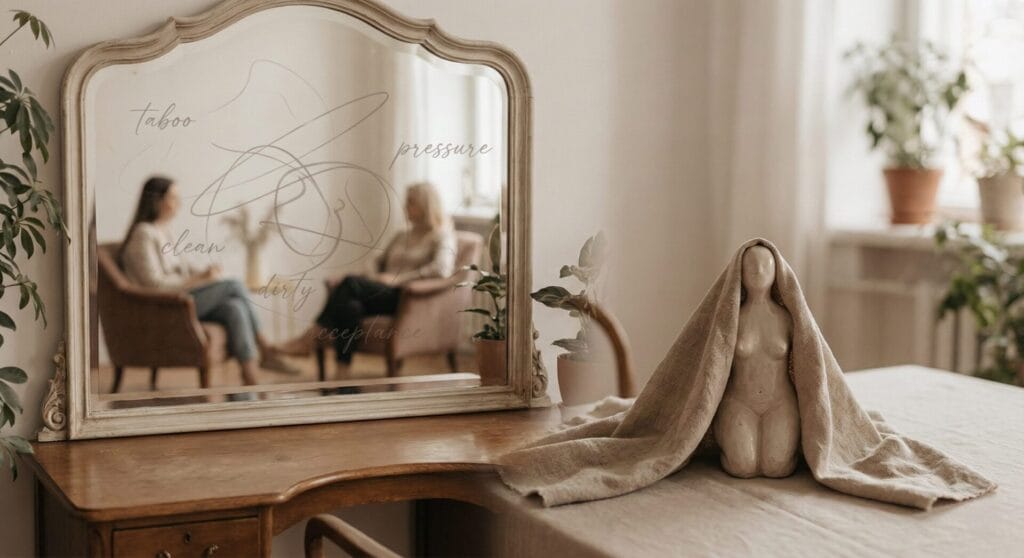
The Therapy Room Mirror
Conversations about hair come up in my office more than you might think. Clients whisper about pubic hair as if it’s taboo, describing it as “gross” or “unhygienic.” They tell me about partners who make comments or about the pressure to stay waxed or lasered for acceptance.
These are not superficial concerns. They’re reflections of how we’ve been conditioned to disconnect from our bodies. Words like clean and dirty get tangled in our erotic language, shaping how we feel about pleasure, touch, and intimacy.
The body becomes a project to manage rather than a home to inhabit.
Reclaiming Hair as Expression
Over time, I’ve begun redefining what hair means for me. I’ve learned to see it as an extension of self-expression, a reminder of my humanity. There’s something rebellious and freeing about letting the body exist as it is.
Sometimes I let the hair on my legs grow out and notice how the sun warms each strand, how the wind feels different against my skin. It’s sensual in a quiet, grounded way. Other times, I still shave because it feels good to me. The point isn’t what I choose, but that I get to choose.
It’s the same message I share with clients: autonomy is sexy. Feeling comfortable in your own body, however you define that, is the real act of liberation.
The Sacred Reminder
Every so often, I catch sight of that little scar on my knee. For a long time, it symbolized embarrassment and awkwardness. Now, I see it differently. It’s the moment my body learned the cost of conformity, but it’s also a reminder of how far I’ve come in reclaiming it.
Hair, to me, is no longer about control. It’s about permission. It’s about softness, safety, and sensuality, which are all the things I once thought I had to hide.
Maybe that’s what growing up really is: unlearning the ways we were taught to disappear.
So when I run my fingers through the hair of someone I love, I feel it as more than texture. It’s memory. It’s connection. It’s home.

