


Rethinking Relationships: Why Platonic Partnerships Are Trending
Redefining Love and Connection in Modern Relationships
In 2025, a married mom went viral on TikTok for an unexpected reason. She wasn’t looking for romance or an affair. Instead, she posted a heartfelt message searching for another straight mom who could offer friendship, emotional support, understanding, and shared experiences like solo travel and intentional time away. Her post resonated widely because it articulated something many people feel but rarely say out loud.
As we move into February, often framed as the “month of love,” this moment opens the door to a broader conversation about what love and connection truly look like in modern relationships.
For generations, we’ve been taught a familiar relationship script: meet someone, fall in love, marry, live together, have children, and share nearly every aspect of life as a couple. While this structure works for some, many people are discovering that it does not fully meet their emotional, psychological, or practical needs.
Increasingly, individuals are questioning whether one relationship should be expected to fulfill every role, partner, best friend, emotional anchor, co-parent, travel companion, and source of identity. When that expectation becomes overwhelming, dissatisfaction, burnout, and emotional distance often follow.
The viral TikTok mom’s message reflects a deeper reality. Many women, particularly those balancing motherhood, careers, caregiving, and emotional labor, experience chronic fatigue and reduced desire. Wanting time alone, space for restoration, or solo experiences is not a sign of relational failure. It is often a signal that the nervous system needs regulation and care.
At the same time, alternative relationship structures are becoming more visible and accepted. Communal living arrangements, shared housing, and tiny home communities appeal to those seeking connection without constant togetherness. These models emphasize friendship, mutual support, and independence, offering community while honoring personal space.
Another relationship model gaining traction is “living apart together,” often referred to as LAT. In these partnerships, committed couples choose to maintain separate homes. This challenges the assumption that love requires cohabitation. For many, living apart reduces daily tension, supports autonomy, and allows intimacy and desire to grow through intentional connection rather than routine proximity.
It is also important to normalize how relationships naturally evolve over time. Passion often shifts into companionship, emotional safety, and trust. This transition is not a loss of love, but a change in its expression. Yet cultural narratives continue to prioritize romantic intensity while undervaluing platonic intimacy, friendship, and chosen family.
Healthy relationships are not defined by proximity, labels, or tradition. They are defined by alignment, communication, consent, and emotional authenticity. When individuals feel empowered to design relationships that reflect their values and needs, connection becomes more sustainable and meaningful.
What This Means for Modern Relationships
As relationship structures continue to evolve, clarity and intention matter more than ever. Whether you are partnered, married, living separately, or redefining connection altogether, the following insights can help guide healthier, more fulfilling relationships.
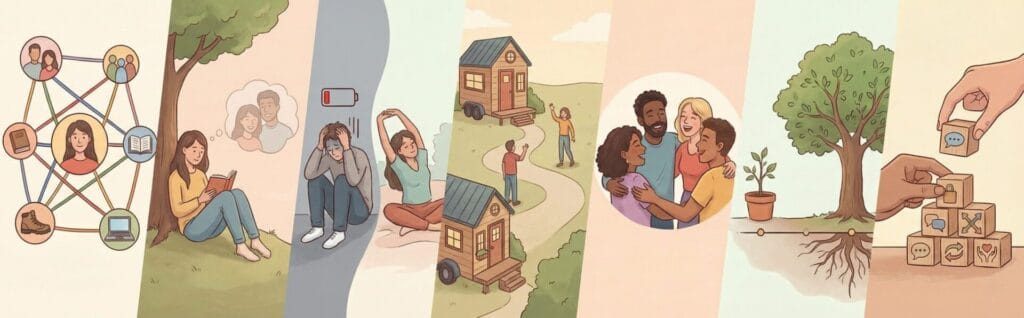
Key Takeaways and Practical Insights
- One relationship does not need to meet every emotional need
Expecting a partner to be a romantic partner, best friend, co-parent, emotional regulator, and sole source of support often leads to burnout and resentment. Healthy relationships thrive when individuals maintain multiple sources of connection. - Time alone is not a threat to intimacy
Research consistently shows that autonomy supports desire. Personal space, solo travel, and individual interests help regulate the nervous system and increase emotional availability within relationships. - Low desire is often a stress response, not a relationship problem
Chronic stress, emotional labor, and fatigue are leading contributors to reduced libido, particularly for women. Addressing rest, boundaries, and self-care often improves desire more effectively than focusing on sex alone. - Living apart or redefining cohabitation can strengthen connection
Models like living apart together (LAT) reduce daily conflict and allow partners to reconnect with intention rather than obligation. Proximity does not equal closeness. - Friendship and platonic intimacy are essential forms of love
Emotional safety, shared values, and mutual support are not exclusive to romantic relationships. Strong friendships and chosen family increase relationship satisfaction overall. - Relationships evolve, and that evolution is healthy
Passion naturally changes over time. Long-term intimacy is built through trust, emotional presence, and shared meaning, not constant intensity. - The healthiest relationships are designed, not inherited
There is no universal template for love. Sustainable relationships are created through honest communication, flexibility, and alignment with personal values rather than social expectations.
A February Reflection on Love
This month of love invites a broader definition of connection, one that honors autonomy, emotional truth, and psychological wellbeing. Whether your relationship looks traditional, unconventional, or somewhere in between, love is healthiest when it supports growth rather than conformity.
The most fulfilling relationships are not the ones that follow the rules best, but the ones that allow people to feel seen, supported, and whole.


